Ensuring Strong Patent Enforcement Position Through Virtual Patent Marking

U.S. patent law encourages patent owners to mark products or services that are covered by at least one claim of a patent. Therefore patent marking is an important step in ensuring a strong patent enforcement position if infringement occurs. The America Invents Act now allows “virtual patent marking” as explained below.

Reason for Marking
Section 287 of Chapter 35 of the U.S. Code provides that if a patent owner fails to mark its patented invention, then the damages will be limited to those arising after the infringer was notified of the infringement. However, if the invention is marked, then the patent owner will be able to get damages back to the start of the infringement (subject to any applicable statute of limitations).

Therefore, lets see what happens if the invention is not marked. Assume that an infringer starts infringing your patent five years ago, but you only discovered the infringement today and thereafter quickly sent the infringer a demand letter notifying the infringer of the infringement. Lets assume that the sales over the last 5 years resulted in 3 million dollars in recoverable patent infringement damages. Since the invention was not marked, the patent owner would only be able to recover damages arising after the infringer received the infringement demand letter, and not the 3 million dollars accruing over the last 5 years.

Therefore, marking has an impact on the damages that are recoverable for infringement. Also, whether the invention was marked impacts how a infringer might react to a claim of infringement. If the infringer has a liability of 3 million dollars in damages the infringer is obviously in an inferior bargaining position in terms of settlement as compared to if the infringer as no monetary liability because the invention was not marked.

Who Should Mark
Those that are making, offering for sale, or selling within the United States any patented article or importing any patented article into the United States should mark. Therefore if you are not commercializing your invention by the above activities, you are not subject to the damages limitations of section 287.

How to Mark
Marking notice may be given either by (1) fixing on the product the word “patent” or the abbreviation “pat.”, together with the number of the patent, or (2) by fixing thereon the word “patent” or the abbreviation “pat.” together with an address of a posting on the Internet, accessible to the public without charge for accessing the address, that associates the patented article with the number of the patent.

If from the character of the patent article, the product itself cannot be marked, then it is permissible to fix the above notice on a label attached to the product or to the package of the product.

Virtual Marking
As provided above, you can provide notice by listing a internet address together with the word patent or pat. where the resulting internet webpage provides an association between each patented article and the corresponding number of the patent. In this way you can quickly and easily update the marking of products with newly issued patents by updating the patent marking webpage to show the patents that apply to the corresponding product. This alleviates the need to change molds or packaging as new patents are issued.

Routinely Updated. The webpage should be updated whenever a patent status changes, including when a patent issues and if a court or the USPTO invalidates or narrows the patent in a way that would change whether the corresponding product is covered by the patent.

Availability. The webpage should be continuously available so that anyone trying to determine the patents covering a product/service will be able to have ready access to the webpage. Records of continuous webpage availability should be kept.

Change log. Further it would be best to keep a change log of the changes to the patent marking webpages so that the log shows the details of each change made to the webpage and the date that change was made. This change log is important to show when marking related to a given product/service or patent began on the webpage.

Published Applications. Published patent application and corresponding products may also be listed on the same or a different web page. When listing published patent application on the same page as issues patent, it should be clear that the published application are not issued patents. The benefit of listing published patent applications is that the webpage might provide actual notice that could allow for the recovery of royalties under provisional patent rights statute.
How to Stop A Competitor From Getting a Patent?

When discovering that a competitor has filed a patent application on a product or service you are making or selling or intend on making or selling, the question sometimes arises how can the competitor be stopped from obtaining a patent? This article will review the options to consider in light of a known or suspected pending patent application.

You might become aware of the competitors patent application by finding “patent pending” notice on your competitors products or literature.

Prior Art
In the case that the competitor did not steal your idea, many options involves showing that the competitor’s invention is not new because it was disclosed previously in the prior art. Patents are provided on new inventions not those that are old and known.

In the U.S. prior art inventions include, but are not limited to, those (1) described in previous patents or published patent applications, (2) described in qualifying publications, (3) in public use, or (4) on sale before the effective filing date of the invention. There are certain exceptions which disqualify prior art by another person as prior art if he can show that the disclosure or event was his own work, i. e., the disclosure or event was not independently created by the other person, and the disclosure or event occurred less than one year before a US patent application was filed.

Once your product or service and information about your competitor’s patent application or patent pending product is understood, a prior art search can be performed to determine whether the competitor is likely to obtain a patent and whether the prior art creates safe harbors for you to operate. Generally this starts with searching prior U.S. patents and patent applications. The search can be expanded to include foreign patents and published patent applications. The search can further be expanded to include non-patent publications, such as scientific journals, books, magazines, certain online publications etc.

Further, prior public sales of the subject matter claimed in the application by you or a third party can act as prior art. If you sold the product or performed the service claimed in the competitor’s patent application, you may search your records and produce documents showing a sale of the product/service before the critical date (such as the effective filing date of the pending patent application). Other other prior art may exist depending on the circumstances.

Safe Harbors
By studying prior art, a patent attorney may be able to advise you how to develop or change your product to come within the safe harbor of the prior art. That is, the old inventions disclosed in the prior art, if practiced exactly as disclosed in the prior art, cannot be covered by a new patent. Therefore, such prior art creates a safe harbor for anyone to operate.

Not only can certain prior art provide operating safe harbors, but it can also be used to narrow the scope or prevent your competitor from obtaining a patent in certain circumstances. If the competitor’s patent application is published, then your patent attorney can review the subject matter that your competitor claims in its patent application. If the patent application shows that your competitor is trying to claim subject matter that is within the safe harbor of the prior art, then you have to decide whether to notify the Patent Office or whether to wait.

Take Action
One option you have is to file a submission with the USPTO informing the Examiner of the prior art and arguing that the current claims in the competitor’s application should not be allowed.

The America Invents Act allows third parties (you or your attorney) to submit to the USPTO any prior art patent, published application, or other printed publication that is of potential relevance to the examination of a patent application. This can be done during certain time frames when an application is pending at the patent office. Most notably it is best to pursue this option early as certain deadlines exist after which filing a submission is not allowed.

In the best case, the Patent Examiner will agree with your view that the submission prevents the competitor from obtaining a patent. The second best case, is that the submission persuades the Patent Examiner to narrow the allowable claims in a way so that the resulting claims do not cover your product or service. In this scenario, the competitor may be able to obtain a patent, but their patent would not cover your product or service.

However, there are risks in submitting prior art into a patent application. The first risk is that the examiner will not agree that the submission impacts the claims and will allow a patent to be granted with broad claims that cover your product or service. If this happens, the patent would be strengthened because the examiner considered the submitted prior art but allowed the patent anyway. There is a presumption that a patent is valid. Therefore the prior art could be less useful in attacking the patent later. However, it is possible that in litigation later a court could determine that the USPTO was wrong and the prior art does invalidate some or all of the claims. As between the two scenarios of (1) submitting prior art and the examiner allowing broad claims anyway, and (2) not submitting the prior art and asserting the prior art later, the second scenario is preferred.

Wait
As a result of the risks listed above, it may be decided not to make a submission to the USPTO. Instead, you can wait to see if a patent is actually granted. It may be that the Examiner will reject the application without any submission. Also, the patent applicant may decide to drop its patent application at some point if, for example, it is decided that further expense to obtain a patent is not justified from a business perspective.

If a patent does issue, you can have a patent attorney draft you a non-infringement or invalidity opinion, if the circumstances permit, showing how the patent does not cover your product or is invalid or both. This opinion might protect you against enhanced damages in an infringement suit.

You can also attack the patent after it issues by asking the Patent Office to revoke the patent or certain claims of the patent by requesting a re-examination. Also, if the patent owner asserts that you infringe the patent, you can ask a court to declare that you don’t infringe and/or that the patent is invalid.

Conclusion
When you discover a competitor has a patent application pending that might cover one or more of your products or services, you have options for (1) determining whether your product or service is likely to be at risk of infringement and (2) attempting to prevent your competitor from obtaining a patent.

Inventorship: When was the Invention Conceived?

Dawson v. Dawson, Dkt. No. 2012-1214, 1215, 1216, 1217 (Fed. Cir. March 23, 3013).

This case deals with the issue of when an invention is conceived and involves an invention ownership dispute between a university and a pharmaceutical manufacturer. The issue was whether an inventor, Dr. Dawson, conceived of the invention while employed at the University of California, San Francisco (“UCSF”) or instead later when he joined Insite, a pharmaceutical manufacturer. This case deals with medical preparations, but is interesting on the conception point.

Background
While employed at UCSF, Dr. Dawson made a presentation at a meeting of the World Health Organization (“WHO”) Alliance for Elimination of Trachoma. Trachoma is a bacterial infection of the eye that can lead to blindness. Dr. Dawson’s presentation covered the topical use of an antibiotic called azithromycin to control trachoma, which later became the subject of two patents at issue in the appeal. Documents from the WHO regarding the meeting, discussed Dr. Dawson’s presentation but also included a number objections to Dr. Dawson’s approach, such as the concern that that “[n]o product is available” and that the “[e]fficacy and dosing schedule” would need to be determined, and that “problems with ointments for trachoma treatment are well known . . . . Ointments are difficult to apply and poorly tolerated.”

Dr. Dawson left UCSF and began working at Insite with Dr. Bowman on a formulation. Dr. Dawson needed the help of Dr. Bowman because Dr. Dawson did not have experience in preparing ophthalmic medication formations. Dr. Dawson and Dr. Bowman later filed two patent applications as joint inventors. These applications resulted in Patent No. 6,239,113 and U.S. Patent No. 6,569,443. UCSF filed an application to provoke an interference.

Principles of Invention Conception
The court recited several principals of invention conception:

  • Conception is the “‘formation in the mind of the inventor, of a definite and permanent idea of the complete and operative invention, as it is hereafter to be applied in practice.’” Hybritech Inc. v. Monoclonal Antibodies, Inc., 802 F.2d 1367, 1376 (Fed. Cir. 1986)
  • After conception “all that remains to be accomplished, in order to perfect the art or instrument, belongs to the department of construction, not creation.” 1 Robinson on Patents 532.
  • “[c]onception is complete only when the idea is so clearly defined in the inventor’s mind that only ordinary skill would be necessary to reduce the invention to practice, without extensive research or experimentation,” and that “[a]n idea is definite and permanent when the inventor has a specific, settled idea, a particular solution to the problem at hand, not just a general goal or research plan he hopes to pursue.” Burroughs Wellcome Co. v. Barr Labs., Inc., 40 F.3d 1223, 1228 (Fed. Cir. 1994).
  • “[b]ecause it is a mental act, courts require corroborating evidence of a contemporaneous disclosure that would enable one skilled in the art to make the invention.” Id.

No Testimony of the Inventors
The court noted that UCSF did not seek testimony from inventor Dr. Dawson or Dr. Bowman on the issue of conception. This is likely because the inventors were not likely to provide favorable testimony to UCSF. However, in this case the reliance on what normally surfaces as corroborating evidence, i.e. contemporaneous disclosure of the alleged conception, was not successful.

General Idea Not Enough in This Case
The court found that the announcement of the general idea in the WHO documents was not sufficient. The court found that the documents provided a preliminary statement about a possibility or potential use and an need for continued work and a report back, fell short of the “definite and permanent idea of the complete and operative invention.”

The Court further found the specific concentrations provided in the patent claims were not disclosed initially in the WHO documents and at the time Dr. Dawson did not know of what concentrations to use.

Dissent
The dissent found the evidence showed that Dr. Dawson did conceive of the invention while at UCSF. The majority responded that it was reviewing the decision of the Board and not evaluating the evidence in the first instance. Therefore the majority only concluded “that substantial evidence supports the Board’s relevant factual findings and that the Board did not err in holding that UCSF failed to meet its burden of proof as to the legal issue of conception.”

Real Estate Software Patent: User Action Steps Prevent Direct Infringement

US5032989Fig3Move, Inc. v. Real Estate Alliance Ltd., Dkt. No. 2012-1342 (Fed. Cir. March 4, 2013)

Move sought declaratory judgement of non-infringement of two of Real’s patents, U.S. 5,032,989 and U.S. 4,870,576. Real counterclaimed  that Move’s “Search by Map” and “Search by Zip Code” website functions infringed the patents. The district court issued summary judgement of non-infringement.

Claim 1 of the ‘989 patent was at issue on appeal and was directed to a method for locating real estate properties using a zoom enabled map on a computer. Claim 1 provided:

1. A method using a computer for locating available real estate properties comprising the steps of:

(a) creating a database of the available real estate properties;
(b) displaying a map of a desired geographic area;
(c) selecting a first area having boundaries within the geographic area;
(d) zooming in on the first area of the displayed map to about the boundaries of the first area to display a higher level of detail than the displayed map;
(e) displaying the first zoomed area;
(f) selecting a second area having boundaries within the first zoomed area;
(g) displaying the second area and a plurality of points within the second area, each point representing the appropriate geographic location of an available real estate property; and
(h) identifying available real estate properties within the database which are located within the second area.

Direct Infringement. In a prior appeal the Federal circuit determined that “selecting an area” as recited in steps (c) and (f) of claim 1 meant that “the user or a computer chooses an area having boundaries, not when the computer updates certain display variables to reflect the selected area.”

The Move system allowed the user to select a predefined area, such as a city, and the system would then zoom into the map according to the predefined boundaries of the area. The court found that the system did not “select an area having boundaries” by showing the predefined area after a user selected the area. Rather the computer just retrieved the map associated with the user’s choice. Therefore Move did not directly carry out the (c) and (f) steps of the claim.

Since Move did not directly carry out all of the steps, it must have direct or control over the performance of the missing steps by another party to be liable for direct infringement. The court found that it did not exert the required direction or control over its users to be liable for direct infringement.

Indirect infringement. The Federal Circuit found that the district court did not conduct the required analysis as to whether Move could be liable for inducing infringement by inducing its users to perform the claimed steps that Move did not itself perform.

Claim Language Suggestions. To allow for direct infringement, the claims could have been worded differently. Assuming the following was supported by the specification and permissible by the prior art, step (c) could have provided “receiving from a user a selection of a first area having boundaries within the geographic area” and step (f) could have provided “receiving from a user a selection of a second area having boundaries within the first zoomed area.” Such language might provide a better case for direct infringement.

[gview file=”http://www.waltmire.com/blog/wp-content/uploads/2013/03/FedCir_Move_v_Real_2012-1342.pdf”]

Gambling Machine Patents: Claims Requiring Player Action Raise Indirect Infringement Issues

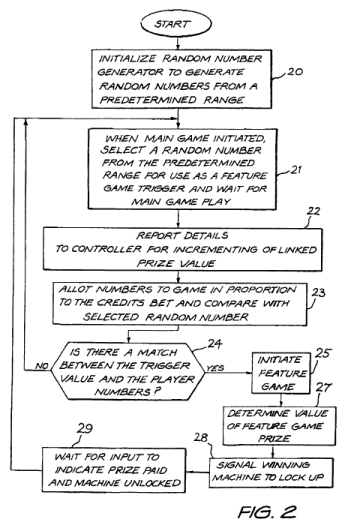
USPatent7056215Aristocrat Tech. Australia v. Int’l Game Tech., Dtk No. 2010-1426 (Fed. Cir. 2013).

Aristocrat sued IGT alleging that IGT’s gambling game devices infringed U.S. Patent No. 7,056,215 (“the ’215 patent”) and U.S. Patent No. 7,108,603 (“the ’603 patent”). The district court granted summary judgment of non-infringement. This case presented an issue of direct vs. indirect infringement because certain claim language was interpreted to require a user/player to perform a step. In order for a party to be liable for direct infringement, “that party must commit all the acts necessary to infringe the patent, either personally or vicariously.” Therefore, in this case, if a player/user was required to perform a step, then IGT would not be liable for direct infringement.

Claim construction. Claim 1 of the ‘215 patent provided system included the following disputed claim language: (1) “awarding said one progressive prize” and (2) “making a wager”.

The Federal Circuit found that “awarding said one progressive prize” required the conferring of rights from the operator of the game to the player and not simply displaying the amount of the prize won. Therefore the actions by IGT’s employees in testing the game were not an infringing activity because during the testing of gaming machines legal entitlement to a prize is never conferred upon IGT employees.

The court also found that “making a wager” meant “betting, which is an act performed by the player” not simply processing a bet by the device.

Direct Infringement. The court found that under the properly construed claims no single actor performed all the steps of the claim. Further the court found that the acts of the user/player could not be imputed to the casino. The court stated “One party’s direction or control over another in a principal-agent relationship or like contractual relation-ship operates as an exception to this general rule, but absent that agency relationship or joint enterprise, we have declined to find one party vicariously liable for another’s actions.” The court found that IGT had no relationship with the player so as to impute the actions of the player to IGT. As a result, the court found no direct infringement.

Indirect infringement. The court reversed and remanded on the issue of indirect infringement, allowing the plaintiff to press its indirect infringement claims. The court stated, “[a] party who knowingly induces others to engage in acts that collectively practice the steps of the patented method–and those others perform those acts–has had precisely the same impact on the patentee as a party who induces the same infringement by a single direct infringer; there is no reason, either in the text of the statute or in the policy underlying it, to treat the two inducers differently.”

[gview file=”http://www.waltmire.com/blog/wp-content/uploads/2013/03/FedCirAristocrat_v_InternationalGame10-1426.pdf”]

Federal Circuit to Consider When A Computer-Implemented Invention Is Patentable

CLS Bank International v. Alice Corporation, No. 2011-1301 (Fed. Cir. 2012) (Order granting en banc rehearing).

The Federal Circuit Court of Appeals has granted an en banc rehearing in the CLS Bank case. As I previously discussed, the majority of a panel found CLS patents directed to using an intermediary in a financial transaction were valid and enforceable. The majority asserted that “when-after taking all the claim recitations into consideration-it is not manifestly evident that the claim is directed to a patent ineligible abstract idea, that claim must not be deemed for that reason to be inadequate under  § 101.” The dissent criticized the majority’s manifestly evident test.

The result in CLS Bank appeared to be in conflict with a prior panel’s decision in Bankcorp v. Sun Life, where a method of managing stable value protected life insurance policy was found not patent eligible.

The Federal Circuit will now rehear CLS Bank en banc, considering the following two questions:

1. What test should the court adopt to determine whether a computer-implemented invention is a patent ineligible “abstract idea”; and when, if ever, does the presence of a computer in a claim lend patent eligibility to an otherwise patent-ineligible idea?

2. In assessing patent eligibility under 35 U.S.C. § 101 of a computer-implemented invention, should it matter whether the invention is claimed as a method, system, or storage medium; and should such claims at times be considered equivalent for § 101 purposes?

Method of Managing Stable Value Protected Life Insurance Policy Found Not Patentable

Bankcorp v. Sun Life, No. 2011-1467 (Fed. Cir. 2012) [PDF].

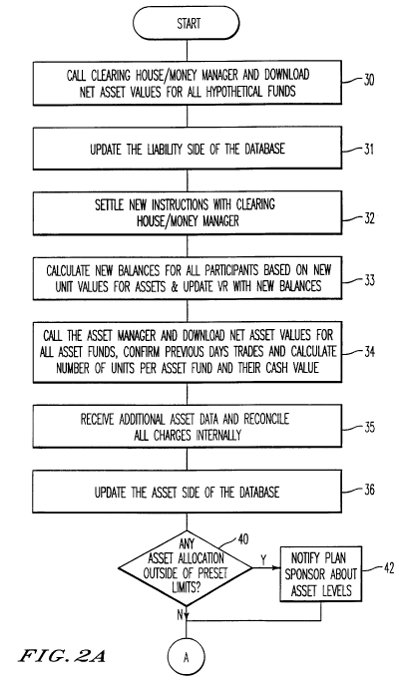
Bankcorp sued Sun alleging infringement of U.S. Patent 5,926,792 and 7,249,037. The patents are directed to methods and systems for administering and tracking the value of life insurance policies.  The district court found both patents invalid as claiming an unpatentable abstract idea under section 101. The Federal Circuit agreed.

Background: Life Insurance Policies. The claims are directed to dealing with a particular type of life insurance plan where the policy owner pays additional premiums beyond that required to fund the death benefit and specifies the type of investment assets in which the additional premiums are invested. This arrangement provide certain tax-advantages. However, the value of this type of policy will fluctuate with the market value of the underlying assets, which may pose an accounting problem for owners that must report the values of such policies on a quarterly basis. To address this fluctuation, a third-party guarantor is brought into the mix to guarantee a given minimum book value on the policy.  The patents are directed to methods and systems that use a formula for determining the values required to manage a stable value protected life insurance policy.

Representative claim 9 of the ‘792 patent provides:

9. A method for managing a life insurance policy on behalf of a policy holder, the method comprising the steps of:

generating a life insurance policy including a stable value protected investment with an initial value based on a value of underlying securities;

calculating fee units for members of a management group which manage the life insurance policy;

calculating surrender value protected in vestment credits for the life insurance policy;

determining an investment value and a value of the underlying securities for the current day;

calculating a policy value and a policy unit value for the current day;

storing the policy unit value for the current day; and

one of the steps of:

removing the fee units for members of the management group which manage the life insurance policy, and
accumulating fee units on behalf of the management group.

The ‘037 patent included claims that were substantially similar to claim 9 of the ‘792 patent. The ‘037 patent also contained system and computer readable medium claims that tracked the method claims.

Do The Claims Require a Computer? The Federal Circuit first determined that the system and computer medium claims required a computer. It also determined that the broadest method claims did not require a computer. The court noted that each method claim has a dependent claim that required that the method be “performed by a computer.” Under the doctrine of claim differentiation, “the presence of a dependent claim that adds a particular limitation raises a presumption that the limitation in question is not found in the independent claim.” Therefore, if a dependent claim required the method to be performed by a computer, then the doctrine of claim differentiation would lead one to the conclusion that the independent claim would not require a computer.

Claim Form Not Determinative: Look to Underlying Invention. The court asserted that it must look not just to the type of the claim but to the underlying invention for patent-eligibility purposes. The court found that the system and computer medium claims were no different from the asserted method claims for patent eligibility purposes.

Use of a Computer Also Not Determinative. The court stated, “To salvage an otherwise patent-ineligible process, a computer must be integral to the claimed invention, facilitating the process in a way that a person making calculations or computations could not.” The court found that the computer required for some of the claims of the Bankcorp patents were employed only for the computer’s most basic function, “the performance of repetitive calculations,  and as such does not impose meaningful limits on the scope of those claims.” The court continued to find there was no material difference between the claims invalidated by the Supreme Court in Bilski and the claims in the present case.  Further the court stated, using a computer to accelerate a patent ineligible mental process does not make that process patent-eligible.

Focus on Whether Inventive Aspects are Abstract. The court noted that when insignificant computer-based limitations are set aside from the claims, the question under section 101 reduces to an analysis of what additional features remain in the claims.  The court found that without the computer limitations nothing in the claims remained but the abstract idea of managing a stable value protected life insurance policy by performing calculations and manipulating the results.As a result the claims of the patents were invalid as directed to unpatentable subject matter.

Distinguishing CLS Bank v. Alice. The court distinguished its prior decision in CLS Bank International v. Alice Corporation, Dkt No. 2011-1301 (Fed Cir. July 9, 2012), because in CLS the court found that the computer limitations of the claims played a significant part in the performance of the invention.

New Manifestly Evident Test Maintains Broad View of Patent Eligible Subject Matter

CLS Bank International v. Alice Corporation, Dkt No. 2011-1301 (Fed Cir. July 9, 2012) [11-1301 Opinion]. 

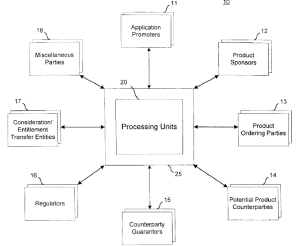
CLS sued Alice for declaratory judgement that  U.S. Patent No. 5,970,479, 6,912,510, 7,149,720, and 7,725,375 owned by Alice were invalid, unenforceable, or otherwise not infringed. The district court held that each of Alice’ s patents were invalid under section 101 for failure to claim patent eligible subject matter. The Federal Circuit reversed maintaining a broad view of patentable subject matter.

Representative Claim 33 of the ‘497 patent provides: A method of exchanging obligations as between parties, each party holding a credit record and a debit record with an exchange institution, the credit records and debit records for exchange of predetermined obligations, the method comprising the steps of:

(a) creating a shadow credit record and a shadow debit record for each stakeholder party to be held independently by a supervisory institution from the exchange institutions;

(b) obtaining from each exchange institution a start-of-day balance for each shadow credit record and shadow debit record;

(c) for every transaction resulting in an exchange obligation, the supervisory institution adjusting each respective party’s shadow credit record or shadow debit record, allowing only these [sic] transactions that do not result in the value of the shadow debit record being less than the value of the shadow credit record at any time, each said adjustment taking place in chronological order; and

(d) at the end-of-day, the supervisory institution instructing one of the exchange institutions to exchange credits or debits to the credit record and debit record of the respective parties in accordance with the adjustments of the said permitted transactions, the credits and debits being irrevocable, time invariant obligations placed on the exchange institutions.

Manifestly Evident Test.The Federal Circuit found that the district court took too narrow a view of patent eligible subject matter . The Federal Circuit introduced a new manifestly evident test which provides, “when–after taking all the claim recitations into consideration–t is not manifestly evident that the claim is directed to a patent ineligible abstract idea, that claim must not be deemed for that reason to be inadequate under  § 101.” The court continued, “It would undermine the intent of Congress to extend a judicially-crafted exception to the unqualified statutory eligibility criteria of § 101 beyond that which is ‘implicitly’ excluded as a ‘fundamental truth’ that is ‘free to all mend and reserved exclusively to none.’ ” (citing Bilski v. Kappos, 130 S. Ct. 3218 (2010)).  The court further stated that “Unless the single most reasonable understanding is that a claim is directed to nothing more than a fundamental truth or disembodied concept, with no limitations in the claim attaching the idea to a specific application, it is inappropriate to hold the claim is directed to patent ineligible ‘abstract idea’ under 35 U.S.C. § 101.”

The Federal Circuit found that the claims of the ‘720 and the ‘375 Patents each had explicit machine limitations. ’720 Patent col.65 ll.42- 48 (“A data processing system . . . comprising a data  storage unit . . . ; and a computer . . . .”); ’375 Patent col.68 ll.5-7 (“A computer program product comprising a computer readable storage medium having computer readable program code embodied in the medium . . . .”). The court found these machine limitations could not be ignored and they were not “insignificant post solution activity.”

Electronic Adjustment Implicates a Machine. Regarding the method claims of the ‘510 patent, the Federal Circuit found that they each provided an “electronic adjustment” limitation, which implicated a machine under the machine-or-transformation test.  The court noted that the CLS agreed that the electronic adjustment required a computer, which was consistent with the patent specification.

Shadow Credit Record Implicates a Machine. Regarding the method claim of the ‘479 patent recited above, the court noted that the claims did not have the “electronic adjustment” limitation, but the claims did contain a “shadow credit record” and a “shadow debit record”, which when read in light of the specification, required a computer implementation. As a result the “shadow credit record” and “shadow debit record” where sufficient to implicate a machine under the machine under the machine-or-transformation test.

The court acknowledged that the mere fact of a computer implementation alone does not resolve the patent eligibility question. The court stated that it was not computer implementation, but the claims as a whole that make the invention patentable.

Dissent. Judge Prost criticized the majority’s manifestly evident test. The dissent asserted that the claims were merely directed to the basic idea of using an intermediary in a financial transaction, which the dissent noted existed since the Early Roman Empire. The dissent asserted that the representative claim 33 of the ‘479 patent involves four simple steps: (a) creating a debit and credit account for each party, (b) checking  the account balances in the morning, (c) adjusting the account balances through the day, and (d) paying the parties at the end of the day if both parties have performed. The dissent dismissed any patentable significance being attached to “shadow records.” The dissent asserted that shadow records are simply used to define an account that is used to ptrack a party’s payments and that any financial intermediation would do this.

The Dissent further noted that the invention is focused on the financial transaction and not the computer implementation. The dissent noted that the ‘disclosure of the invention” section of  the ‘720 Patent almost exclusively discusses the concept of risk minimization in financial transactions. There are no statements that the computer implementation is an advancement in the art and instead provides that the object of the invention can be “achieved by a computing/telecommunications infrastructure that is capable of being accessed worldwide by any enterprise/individual having access to a computer and a telephone network.” The dissent asserts that the rest of the specification is devoid of any teaching for how one implements computer systems.

Focus on Whether Inventive Aspects are Abstract. The Dissent asserts that “we must look beyond the non-inventive aspects of the claims and ask whether the remaining portion is and abstract idea.”

Yahoo Sues Facebook Alleging Infringement of 10 Patents

Yahoo! Inc. v. Facebook Inc., Dkt. 12-cv-01212 (N.D. Cal. March 12, 2012). [Complaint]

Yahoo filed suit against Facebook on March 12, 2012 alleging infringement of 10 patents. The patents fall into five categories (1)  online advertising, (2) user privacy, (3) customized content for users, (4) social networking, and (5) user to user communications through messaging.

The patents corresponding to each category include (1) U.S. Patent No. 6,907,556; 7,100,111; 7,373,599; 7,668,861 (2) 7,3736,590; 7,599,935 (3) 7,373,509;  5,983,227 (4) 7,747,648 and (5) 7,406,501.

The complaint alleges that Facebook copied technology developed by Yahoo. The complaint quotes Mark Zuckerberg as saying “The thing that’s been really surprising about the evolution of Facebook is–I think then and I think now–that if we didn’t do this someone else would have done it . . . Getting there first is not what it’s all about.” In other words, Yahoo asserts that Facebook admits that it copies the technology of others, because they were not first to develop the technology.

MySpace and Craigslist Invalidate Patents on Database with User Creatable and Categorizable Entries

MySpace, Inc. v. Graphon Corp., Dkt. No. 2011-1149 (Fed. Cir. March 2, 2012).

MySpace and Craigslist sued Graphon for declaratory judgement of non-infringement of U.S. Patent Nos. 6,324,538, 6,850,940, 7,028,034, and 7,269,591 (patents in suit). Graphon counterclaimed for patent infringement. The district court found the claims at issue in the patents in suit were invalid as either anticipated or obvious based upon a system called the Mother of all Bulletin Boards (MBB) and the Federal Circuit agreed.

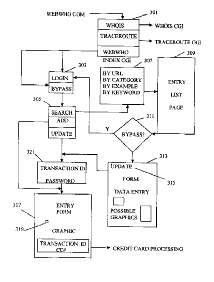
User Manipulable Database Entries. The patents in suit were directed to a method and apparatus that allowed a user to create, modify, and search for a database record over a computer network. The inventors of the patents in suit claimed the prior systems, like Yahoo! directory, provided that the search engine operator rather than the users would categorize website listings. Under this system of categorization, the categorizer would miscategorize entries without user input. The inventors attempted to overcome this problem by allowing users to create and edit one or more database entries with their own text and graphics and then to create for each entry searchable categories that best matched the information in each entry.

Prior Art. Before the earliest priority date of the patents in suit, the Mother of all Bulletin Boards (MBB) was developed at the University of Colorado. The MBB allows the creation of an Internet catalogue that grew through user input without intervention from an administrator. The data in the MBB system was stored hierarchically as apposed to relationally (e.g. a relational database).

“Database” Includes Hierachical and Relational. The Federal Circuit found that the disputed claim term “database” included both hierachical and relational databases in the patents in suit. Therefore, the MBB’s use of a hieracrchical system met the claim term “database” and therefore resulted in the invalidity of the subject claims of the patents in suit. The court noted that the term “database” is generally understood to include different types of data organization systems, including hierarchical and relational systems. The court rejected Graphon’s argument that the written description and the prosecution history of the patents in suit indicate that the term database should be limited to relational database. If the term was so limited, the MBB would likely not invalid the patents in suit. The court found that the written description described features contained in multiple types of databases and therefore the term database could not be limited to relational databases.

Written Description & Reading in Limitations. The court explain that two principles on claim construction were complementary rather than competing. The first principle is that the written description is the best source for understanding the technical meaning of a claim. The second principle is that limitation from the written description cannot be read into the claims absent a clear intention by the patentee. The court explained that there are two limiting factors during claim construction–what was invented and what was claimed. A patentee can claim less than was invented, but never more than was invented. The court directed that we look to the entire patent to determine what was invented. Yet to determine what was claimed, the precise words of a claim are to be reviewed and the written description is used as an aid in understanding those words.

Address Patentable Subject Matter First? The dissent argued that before considering whether the patents in suit were invalid as obvious or anticipated, the court had a duty in the first case to determine whether the patents claimed patentable subject matter under section 101, even if the issue was not raised by the parties or the trial court. The majority rejected this approach. The majority noted the difficulty that courts had in defining the bounds of patentable subject matter. The majority stated that validity determinations under section 102, 103, 112 (anticipation, obviousness, and enablement) are the best approach to resolving most cases. These approaches avoid the search for universal truths that may be necessary when searching the bounds patentable subject matter under section 101. However, the court did not say that section 101 could never be raised first in a patent suit. Yet in first looking to sections 102, 103, and 112, the court said that questions of patent validity could be concluded in many cases without wading into the “murky morass that is section 101 jurisprudence.”